Sudden Shake-Up in Macau: Finance Secretary Tai Kin Ip Resigns Over Personal Reasons
Eden Otto · Apr 16, 2026

Sudden Shake-Up in Macau: Finance Secretary Tai Kin Ip Resigns Over Personal Reasons
The Resignation Announcement
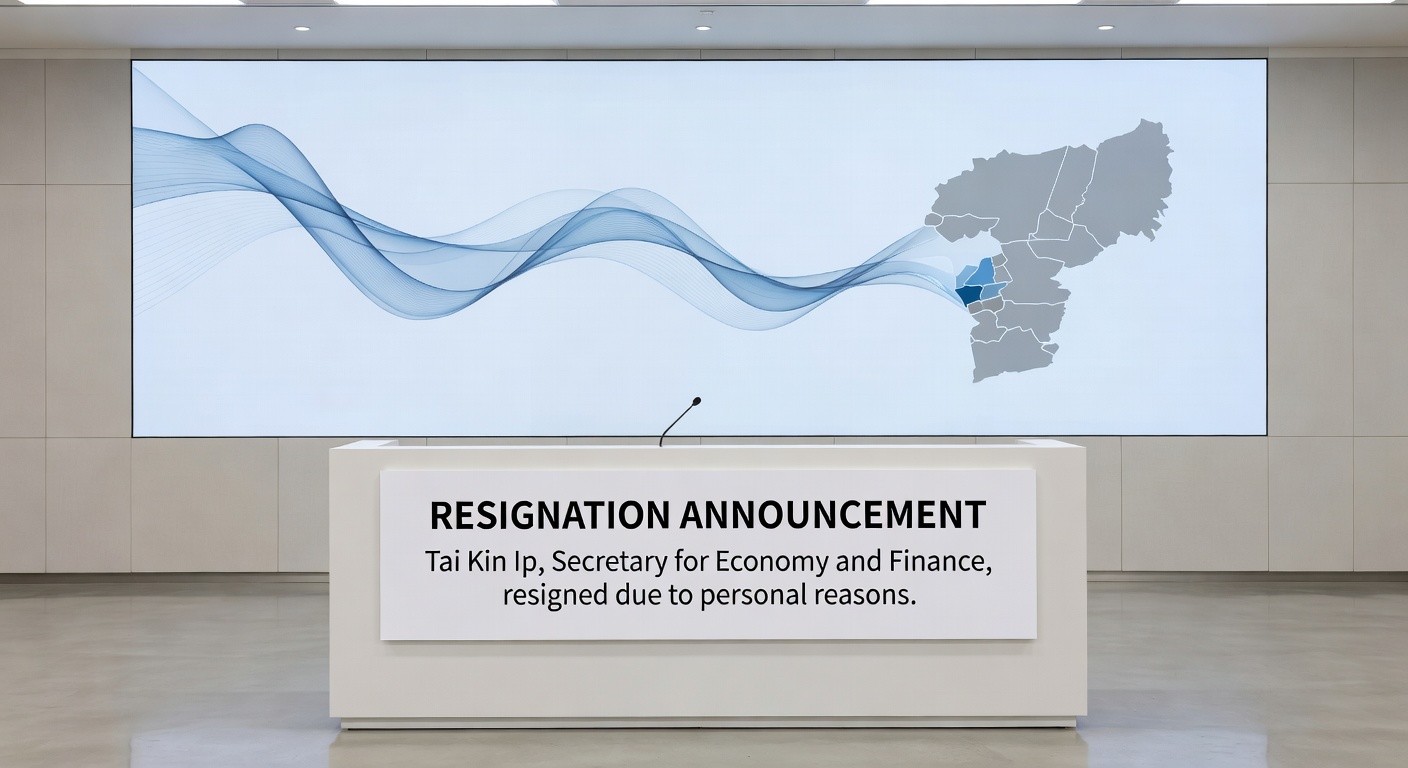
Tai Kin Ip stepped down as Macau's Secretary for Economy and Finance citing personal reasons, a move that China's State Council approved at the proposal of Chief Executive Sam Hou Fai; the resignation took effect immediately, sending ripples through the world's largest gambling hub where casinos drive the bulk of economic activity. According to Reuters, Ip had held the position since late 2024, overseeing a staggering $30 billion gambling industry that includes major operators like Sands China, Wynn Macau, MGM China, SJM Holdings, Melco Resorts, and Galaxy Entertainment. In the interim, Sam Hou Fai will shoulder those duties while authorities line up a successor nomination for Beijing's green light, a process that underscores Macau's tight integration with central Chinese oversight.
Observers note how such high-level changes unfold swiftly in Macau, especially given the region's special administrative status under China, where economic portfolios carry outsized weight amid post-pandemic recovery efforts. Data from the Gaming Inspection and Coordination Bureau highlights that gross gaming revenue hit record highs in recent quarters, making Ip's departure a focal point for industry watchers who track leadership shifts closely. And while personal reasons remain the stated cause, the immediate effect on policy continuity becomes the real question mark hanging over Cotai Strip boardrooms.
Tai Kin Ip's Tenure at the Helm
Since taking office in late 2024, Tai Kin Ip navigated Macau's economy through a phase of aggressive diversification beyond pure gambling reliance, although casinos still accounted for over 80% of government revenue; experts have observed how he balanced regulatory tweaks with operator incentives, fostering growth in non-gaming sectors like tourism and conventions. Figures reveal that under his watch, visitor numbers surged past 30 million annually by early 2026, buoyed by relaxed travel policies from mainland China, yet challenges persisted with economic headwinds from global slowdowns.
Take the major concessionaires: Sands China expanded its integrated resorts with fresh entertainment offerings, Wynn Macau ramped up high-roller programs, and MGM China pushed sustainability initiatives, all while Ip's office coordinated licensing renewals set to run through 2032. What's interesting is how his role extended to fiscal policies, including tax structures that funneled billions into public coffers; one report from the Macau government's economic bureau indicated that gaming taxes alone topped $25 billion in the last fiscal year, a testament to the sector's resilience Ip helped steward. But here's the thing—his exit comes at a time when Beijing emphasizes "high-quality development," prompting questions on whether his successor will accelerate those shifts.
People who've followed Macau's trajectory know Ip wasn't new to the scene; prior roles in finance and administration equipped him to handle the casino juggernaut, where operators like SJM Holdings—rooted in local pioneer Stanley Ho's legacy—coexist with international giants such as Melco Resorts and Galaxy Entertainment. Turns out, his brief stint aligned with a rebound period post-COVID restrictions, where daily gaming volumes climbed back toward pre-pandemic peaks, although mass-market play outpaced VIP segments according to industry trackers.
Macau's Gambling Empire: The $30 Billion Backbone
The city's gambling industry, often dubbed the "Las Vegas of the East," generates more revenue than the entire Strip in Nevada combined, with six licensed concessionaires dominating the landscape; Sands China leads in market share, followed closely by Galaxy Entertainment, while Wynn, MGM, SJM, and Melco carve out niches in luxury and mass entertainment. Data indicates that in 2025 alone, gross gaming revenue approached $30 billion, rebounding sharply from pandemic lows, and Ip's policies supported this through streamlined approvals for resort expansions.
So what makes this sector tick? Integrated resorts blend hotels, retail, and shows with gaming floors spanning millions of square feet; for instance, Galaxy Macau boasts over 1,500 gaming tables, dwarfing competitors elsewhere, and Melco's City of Dreams draws families alongside gamblers. Researchers who've studied Asian gaming markets point out how Macau's monopoly-like structure—fewer operators than Las Vegas—amplifies economies of scale, yet regulatory harmony with Beijing keeps operations aligned with national priorities like anti-money laundering measures. Ip's oversight ensured compliance during a period of heightened scrutiny, where authorities ramped up audits on junket operators who funnel high-stakes players.
Yet the industry's pulse quickens with seasonal fluxes; Chinese New Year periods see table occupancy rates top 90%, while off-peak months test resilience through promotions. One case where experts found Ip's influence pivotal involved coordinating stimulus packages in 2025, which extended operator licenses and eased capital requirements, spurring investments north of $10 billion in new projects. It's noteworthy that non-gaming revenue now claims 10% of resort earnings, a shift Ip championed alongside calls for more MICE events—meetings, incentives, conventions, exhibitions—to broaden the base.
The Approval Process and Interim Leadership
China's State Council rubber-stamped the resignation swiftly, reflecting the centralized control over Macau's top appointments since the 1999 handover; Chief Executive Sam Hou Fai, elected in 2022, proposed the move, signaling internal consensus on Ip's departure despite no public elaboration on those personal reasons. Now, with duties shifting to Hou Fai temporarily, the administration prepares a nominee for State Council vetting, a step that typically wraps in weeks given Beijing's efficiency on such matters.
Those who've tracked similar transitions recall how past secretaries maintained stability during handovers; for example, when predecessors rotated amid economic cycles, gaming revenues rarely dipped more than 5%, as operators adapt quickly to policy signals. Hou Fai, a judicial background figure turned executive, now juggles this portfolio alongside his core duties, potentially prioritizing continuity in upcoming budget talks slated for mid-2026. And while speculation swirls in casino corridors, official channels emphasize seamless operations, with no immediate disruptions flagged for concessionaires.
Broader Context in April 2026
As of April 2026, Macau's economy hums with optimism tempered by global uncertainties; visitor arrivals from mainland China hit 25 million in the first quarter, per tourism bureau stats, fueling casino floors where electronic gaming machines outnumber tables 3-to-1. Ip's tenure coincided with tech integrations like cashless wagering and AI-driven player analytics, trends that operators like Wynn Macau pioneered under regulatory nods. But the reality is, leadership changes test adaptability in a market where Beijing's "common prosperity" directives push for equitable growth beyond elite gaming.
Experts observe patterns in such resignations—often personal or health-related, rarely tied to scandals—yet they spotlight the human element in a high-stakes arena. One study from the University of Macau's gaming research institute revealed that executive stability correlates with revenue steadiness, with low turnover yielding 7% higher growth rates over five-year spans. Here's where it gets interesting: Hou Fai's interim role buys time for a successor who might hail from finance circles or gaming regulators, ensuring the $30 billion engine keeps revving without missing a beat.
Looking Ahead: Stability Amid Change
With Ip's immediate exit approved and Hou Fai stepping in, Macau's gambling powerhouses brace for nomination news that could shape the next phase; operators such as Sands China and MGM China continue expansions uninterrupted, banking on policy predictability that's defined the hub for decades. Data from recent quarters shows table games revenue up 15%, a momentum Ip helped sustain, and while personal reasons close one chapter, the industry's forward march—fueled by innovation and oversight—remains unaltered.
The writing's on the wall for quick succession, as Beijing prioritizes economic vitality in its sole gambling enclave; those monitoring Cotai know that transitions like this, though abrupt, rarely derail the golden goose generating billions. And so, as April 2026 unfolds, eyes turn to the next appointee who'll helm the finance secretary role, keeping Macau's casino crown firmly in place.
Conclusion
Tai Kin Ip's resignation marks a pivotal, if personal, shift for Macau's economy and its dominant $30 billion gambling sector, with Chief Executive Sam Hou Fai ensuring interim continuity pending Beijing's nod on a replacement; the event, unfolding in April 2026, highlights the seamless machinery of governance in the world's top gaming destination, where leadership changes pivot without halting the industry's robust trajectory. Observers anticipate steady operations ahead, as concessionaires like Galaxy Entertainment and SJM Holdings press forward amid diversification efforts that Ip advanced during his tenure since late 2024.